


Many people confuse an inventory of heirs (hasr al-waratha, حصر الورثة) with an estate inventory (hasr al-tarika, حصر التركة). The inventory of heirs establishes who inherits; the estate inventory establishes what the deceased left: property, money, accounts, companies and debts. An estate cannot be divided correctly without a complete inventory. Here we explain the steps of an estate inventory, how to uncover the deceased's assets, and what is deducted before division.

Reviewed by: Raghad Mamdouh Al-KhamshiLegal Affairs Manager at Usus Law FirmLast updated:
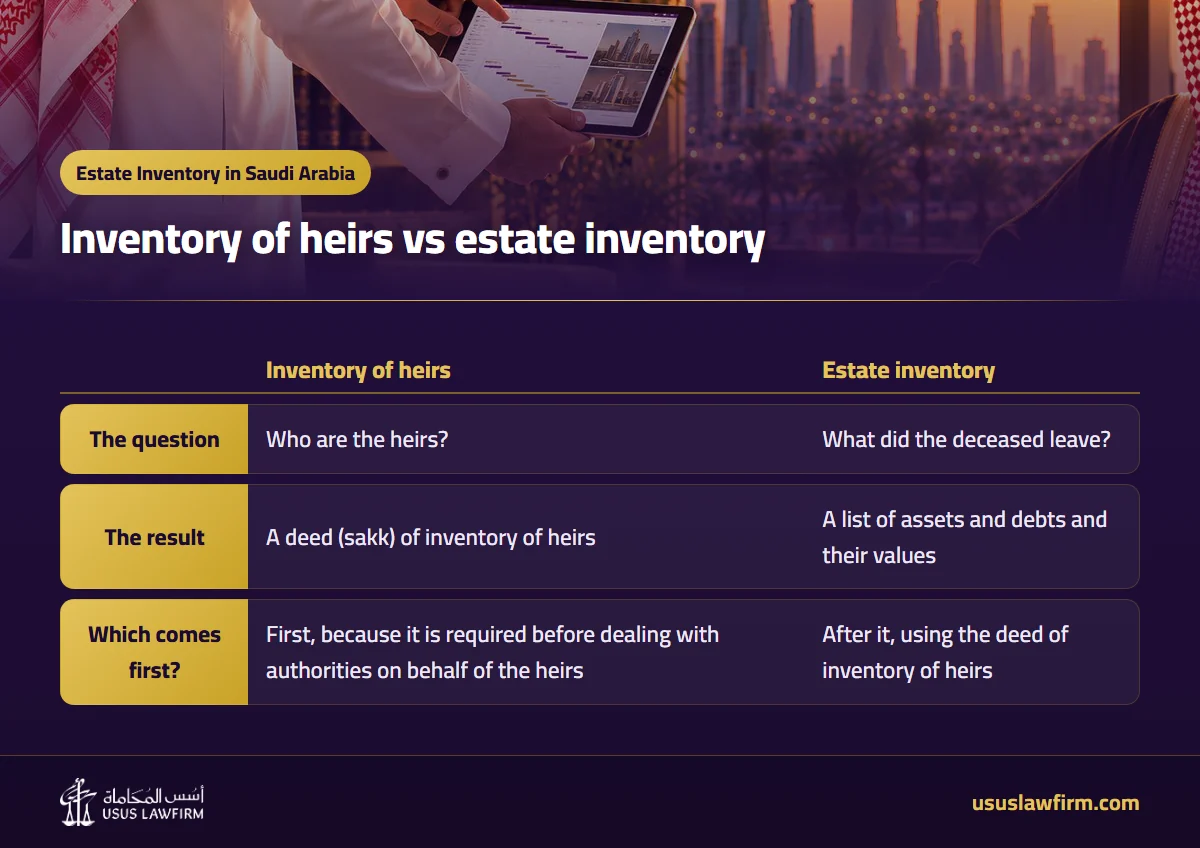
Inventory of heirs vs estate inventory
| Inventory of heirs | Estate inventory | |
|---|---|---|
| The question | Who are the heirs? | What did the deceased leave? |
| The result | A deed (sakk) of inventory of heirs | A list of assets and debts and their values |
| Which comes first? | First, because it is required before dealing with authorities on behalf of the heirs | After it, using the deed of inventory of heirs |
Read Inventory of heirs and estate division.
What does an estate inventory cover?
- Real estate: land, homes and buildings, and checking their title deeds and status. Read Checking a property title deed.
- Money: bank accounts, deposits, investment portfolios and shares.
- Companies and establishments: shares, commercial registrations, and what is owed to and by them.
- Movable property: cars, gold and valuable possessions.
- Rights: debts owed to the deceased by others, compensation and employment entitlements.
- Liabilities: the deceased's debts and other obligations.
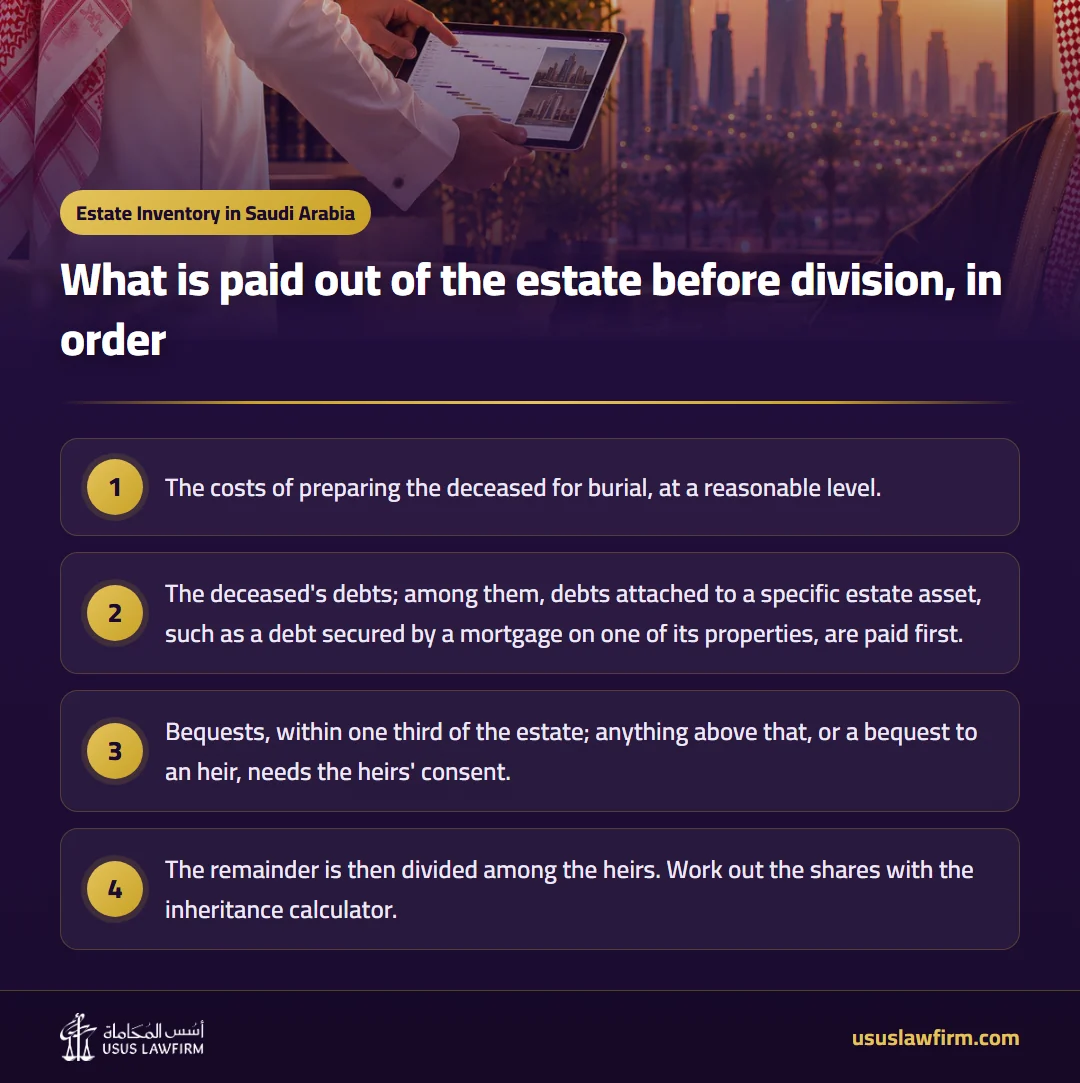
What is paid out of the estate before division, in order
- The costs of preparing the deceased for burial, at a reasonable level.
- The deceased's debts; among them, debts attached to a specific estate asset, such as a debt secured by a mortgage on one of its properties, are paid first.
- Bequests, within one third of the estate; anything above that, or a bequest to an heir, needs the heirs' consent.
- The remainder is then divided among the heirs. Work out the shares with the inheritance calculator.
This is the order set by Article 198 of the Saudi Personal Status Law; the limits on bequests are in Articles 179 and 190.
How do you uncover the deceased's assets?
- Bank accounts are traced using the deed of inventory of heirs, through the competent authorities and the banks.
- Property registered in the deceased's name is traced through the competent real estate authorities.
- The deceased's papers and correspondence are reviewed to identify debts owed to and by them.
- Where there is a dispute, or an heir is hiding assets, this can be requested through the court.
For expatriate families: court proceedings and official documents are in Arabic, so documents issued abroad will need an Arabic translation. Our team can advise you in English.
Estate e-services on Najiz (the «Tarka» services)
The Ministry of Justice offers electronic estate services on Najiz, often searched for as the «Tarka platform», including:
- Estate inventory document: issued electronically, listing the deceased's assets, funds and documented rights, through links with government bodies.
- Heirs' register: a document with the details of the deceased, the heirs and their shares.
- Estate division enforcement request: filed on Najiz with electronic verification of heirs and links with the Saudi Central Bank and the Capital Market Authority, so heirs usually do not need to attend court.
These services work smoothly when the heirs agree. Where there is a dispute over assets, unregistered assets or contested debts, the route is the competent court. Service names and conditions are updated; check Najiz.
Frequently asked questions
One of the heirs refuses to disclose assets they manage. What can we do?
You can file an estate division claim together with a request for an accounting. The court may order disclosure and an inventory, and appoint a liquidator where needed.
Is tax payable when property passes to the heirs?
Distributing an estate among the heirs is one of the cases exempt from the Real Estate Transaction Tax. Read Real estate transactions.
Years have passed without an estate inventory. Have we lost our right?
Read Does an inheritance claim expire with time?.
Need an estate inventory or division?
The Usus Law Firm team handles estates and inventory of heirs: inventory, disclosure and division, by agreement or through the courts, in Riyadh and Tabuk.
Legal review: the Usus Law Firm team
A select team of lawyers and legal advisers licensed by the Saudi Ministry of Justice, working from Riyadh and Tabuk, with experience before the general, commercial, labor, criminal, personal status and administrative courts. Every article is reviewed before publication and updated when laws or regulations change.
Last reviewed: 22 November 2026
This article is general legal information and is not a substitute for advice on your specific case. Court proceedings in Saudi Arabia are in Arabic; the official Arabic text of each law prevails.
Request a quick consultation
Leave your name and mobile number, and a lawyer from our Riyadh or Tabuk office will call you during working hours. We advise in English.