


An offensive WhatsApp message, defamation on Snapchat or X, a hacked account, or blackmail with photos: all of these may fall under the Anti-Cybercrime Law (Nizam Mukafahat Al-Jara'im Al-Ma'lumatiyah, نظام مكافحة الجرائم المعلوماتية). The law was issued by Royal Decree No. (M/17) dated 8/3/1428H, and it criminalises acts committed using an information network or a computer. Here we explain the main crimes it covers, how to report if you are a victim, and what to do if you are accused.
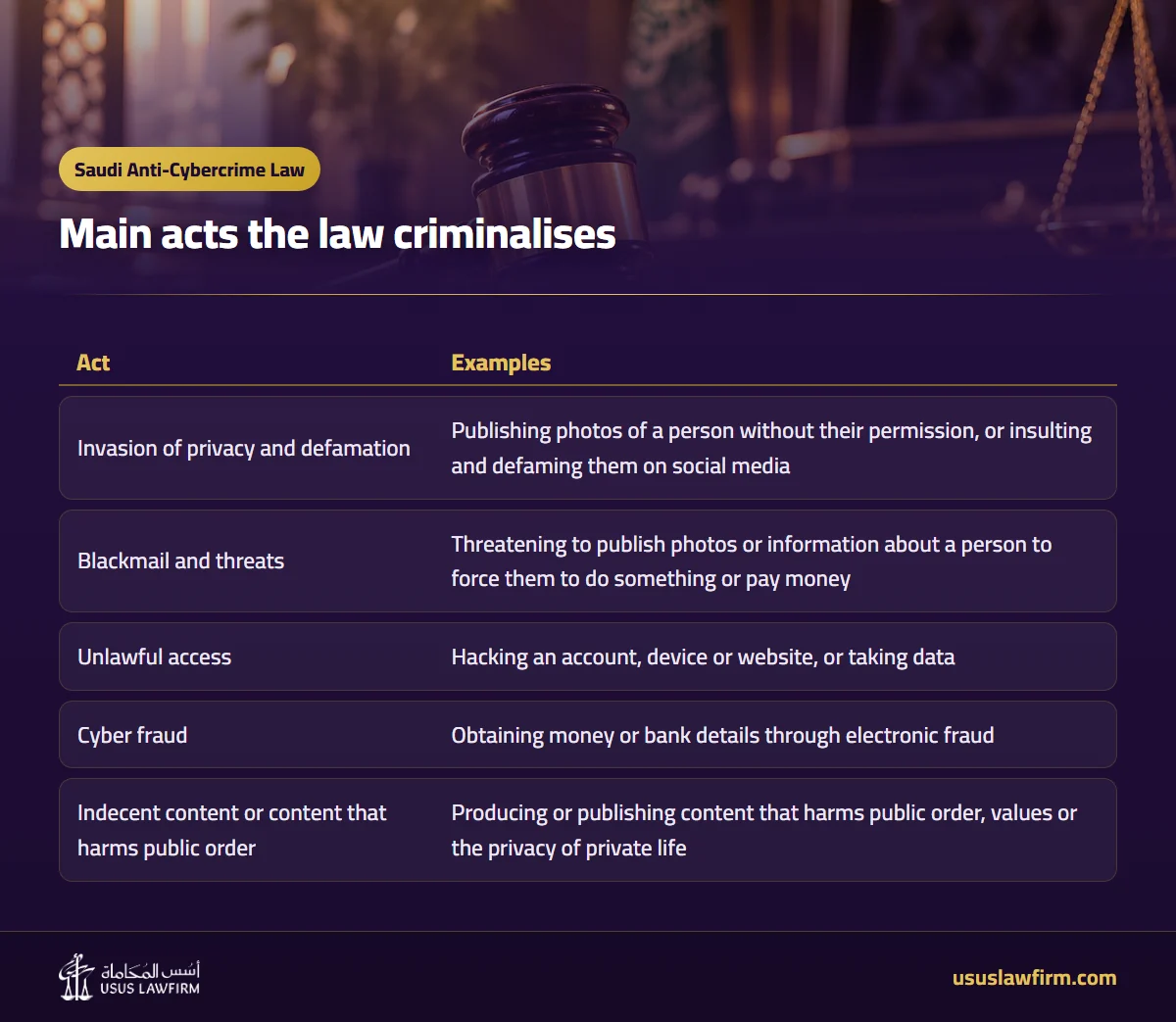
Main acts the law criminalises
| Act | Examples |
|---|---|
| Invasion of privacy and defamation | Publishing photos of a person without their permission, or insulting and defaming them on social media |
| Blackmail and threats | Threatening to publish photos or information about a person to force them to do something or pay money |
| Unlawful access | Hacking an account, device or website, or taking data |
| Cyber fraud | Obtaining money or bank details through electronic fraud |
| Indecent content or content that harms public order | Producing or publishing content that harms public order, values or the privacy of private life |
Penalties vary according to the act and include imprisonment and a fine, or either of them, with confiscation of the devices used in some cases. The law also punishes attempt, incitement and assistance. Check the current official text for the penalty set for each article.
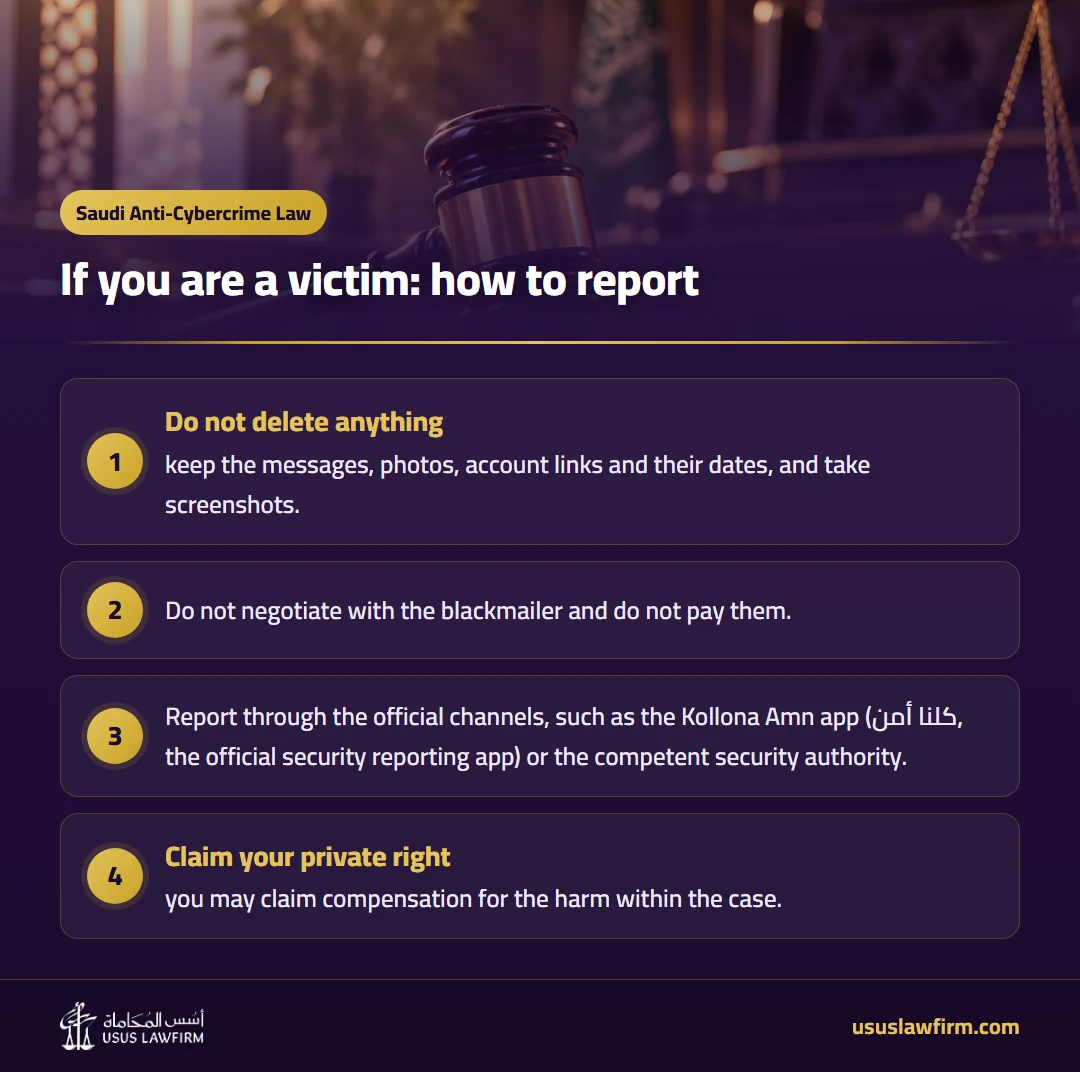
If you are a victim: how to report
- Do not delete anything: keep the messages, photos, account links and their dates, and take screenshots.
- Do not negotiate with the blackmailer and do not pay them.
- Report through the official channels, such as the Kollona Amn app (كلنا أمن, the official security reporting app) or the competent security authority.
- Claim your private right: you may claim compensation for the harm within the case.
If you are accused
- Do not delete your accounts or chats after the report: this may be interpreted against you and lose you evidence in your favour.
- Do not contact the person who reported you to threaten or appease them in a way that could count as a new offence.
- Get a lawyer before the investigation: many cases turn on who created the account, who actually posted, and the full context of the conversation.
Investigation and trial are conducted in Arabic, so messages in other languages will need an Arabic translation. Our team can advise you in English. The investigation and trial procedures are explained in The Law of Criminal Procedure explained and The Criminal Court.
How to record digital evidence so it counts
- Full screenshots showing the account name or number, the date and time, and the message.
- The link to the account or post, saved in a file, since accounts change names or get deleted.
- Do not edit or crop images in a way that hides details.
- Keep the device or original chat without deleting; it may be examined.
- Note witnesses who saw the post before it was deleted, if any.
Frequently asked questions
Is an offensive message in a private chat a cybercrime?
It can be, depending on its content and effect. Insults, threats and abuse sent through devices can fall under the law even in a private chat.
Can I be held liable for reposting an offensive post?
Yes, you may be, because reposting is publishing. Think before you retweet or share.
Are electronic chats accepted as evidence?
Yes. The Law of Evidence strengthened the weight of digital evidence, though its authenticity can still be challenged.
Facing blackmail or defamation, or an accusation?
The Usus Law Firm team handles cybercrime cases for both victims and accused persons in complete confidence, as part of our criminal cases practice, in Riyadh and Tabuk.
This article is general legal information and is not a substitute for advice on your specific case. Court proceedings in Saudi Arabia are in Arabic; the official Arabic text of each law prevails.
Request a quick consultation
Leave your name and mobile number, and a lawyer from our Riyadh or Tabuk office will call you during working hours. We advise in English.