

Muntaha al-Iradat (منتهى الإرادات في جمع المقنع مع التنقيح وزيادات): A comprehensive Hanbali text combining al-Muqni' and al-Tanqih with additions. The author's own commentary, Ma'unat Uli al-Nuha, is also on Shamela.

Reviewed by: Ahmad Farag Al-Sayed MuhammadHead of the Criminal Department at USUS Law FirmLast updated:
About the book
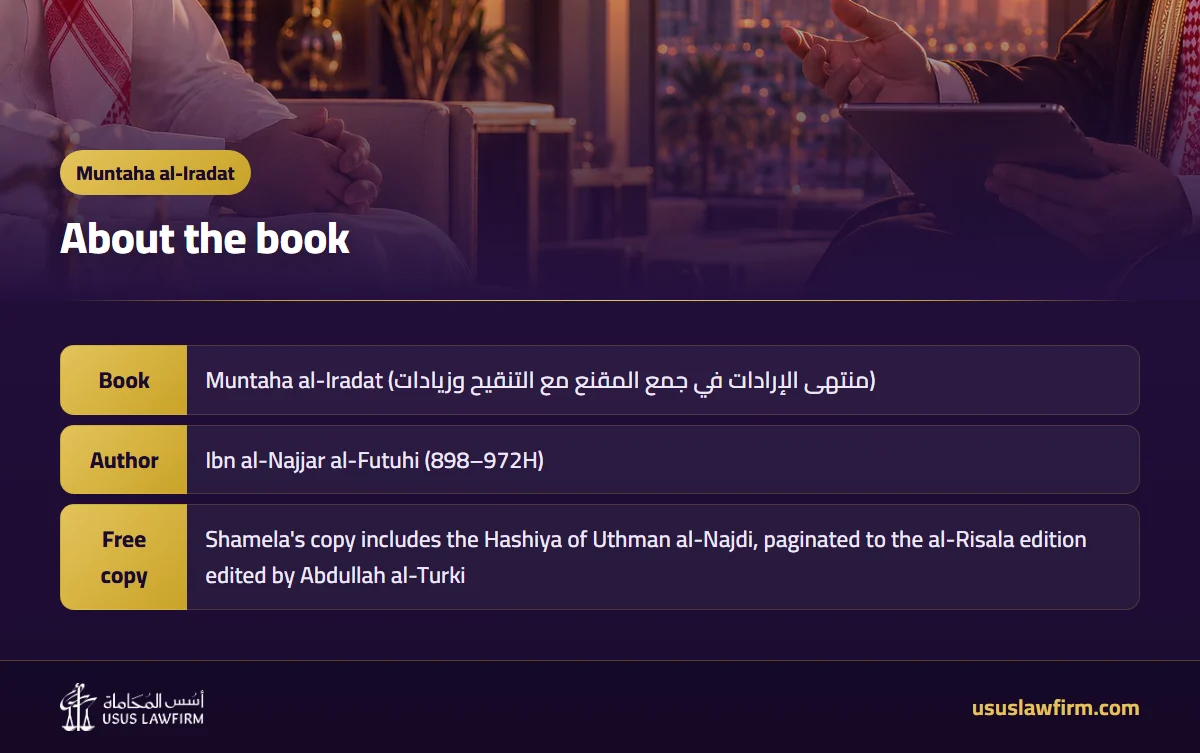
| Book | Muntaha al-Iradat (منتهى الإرادات في جمع المقنع مع التنقيح وزيادات) |
|---|---|
| Author | Ibn al-Najjar al-Futuhi (898–972H) |
| Free copy | Shamela's copy includes the Hashiya of Uthman al-Najdi, paginated to the al-Risala edition edited by Abdullah al-Turki |
Read it free
The book can be read free of charge on al-Maktaba al-Shamila, with a table of contents and full-text search. The text is in Arabic.
Read the book on al-Maktaba al-Shamila
Printed editions are available from bookshops for those who prefer a paper copy.
Chapters of legal interest
- Transactions
- Marriage and maintenance
- Inheritance
- Crimes
- Judgeship
Why it matters today
Many questions before the Saudi courts, especially in family law, inheritance and crimes, go back to Islamic jurisprudence, and the Hanbali school is the one generally applied. Modern laws such as the Personal Status Law have codified many of these rules, so the classical works help in understanding where a rule comes from and why.
Related guides
This page introduces the book as part of the Usus Law Firm library. It is not a substitute for asking qualified scholars on religious questions, or a lawyer on a case.
Legal review: the Usus Law Firm team
A select team of lawyers and legal advisers licensed by the Saudi Ministry of Justice, working from Riyadh and Tabuk, with experience before the general, commercial, labor, criminal, personal status and administrative courts. Every article is reviewed before publication and updated when laws or regulations change.
Last reviewed: 23 October 2026
This article is general legal information and is not a substitute for advice on your specific case. Court proceedings in Saudi Arabia are in Arabic; the official Arabic text of each law prevails.
Request a quick consultation
Leave your name and mobile number, and a lawyer from our Riyadh or Tabuk office will call you during working hours. We advise in English.